When a clutch pedal stays pressed against the carpet, driving becomes difficult and potentially unsafe. Many drivers immediately ask, “why is my clutch pedal stuck to the floor?” The answer may involve a failed hydraulic component, a stretched cable, or an internal clutch problem. Sometimes, the cause is surprisingly simple, such as low clutch fluid or air trapped in the hydraulic line.
A soft or collapsed pedal often points toward the clutch master cylinder, slave cylinder, or a leaking connection. Look beneath the vehicle for fresh fluid, and check the reservoir before assuming the clutch assembly has failed. A broken return spring can also leave the pedal hanging low. In cable-operated systems, fraying or sudden cable failure may produce similar symptoms. The pedal may feel normal one moment, then drop without warning.
Do not force the gear lever.
A qualified technician should inspect the system before replacing expensive parts. Professional diagnosis usually begins with visual checks, fluid testing, pedal movement, and hydraulic pressure assessment. The exact cause depends on the vehicle’s design, age, maintenance history, and recent symptoms. I must acknowledge one important limitation: a stuck pedal cannot be diagnosed reliably from appearance alone. A leak may be hidden above the pedal, while a worn release bearing may require transmission removal. This guide explains practical warning signs, likely causes, and sensible next steps, while recognizing that workshop testing remains the most dependable solution.
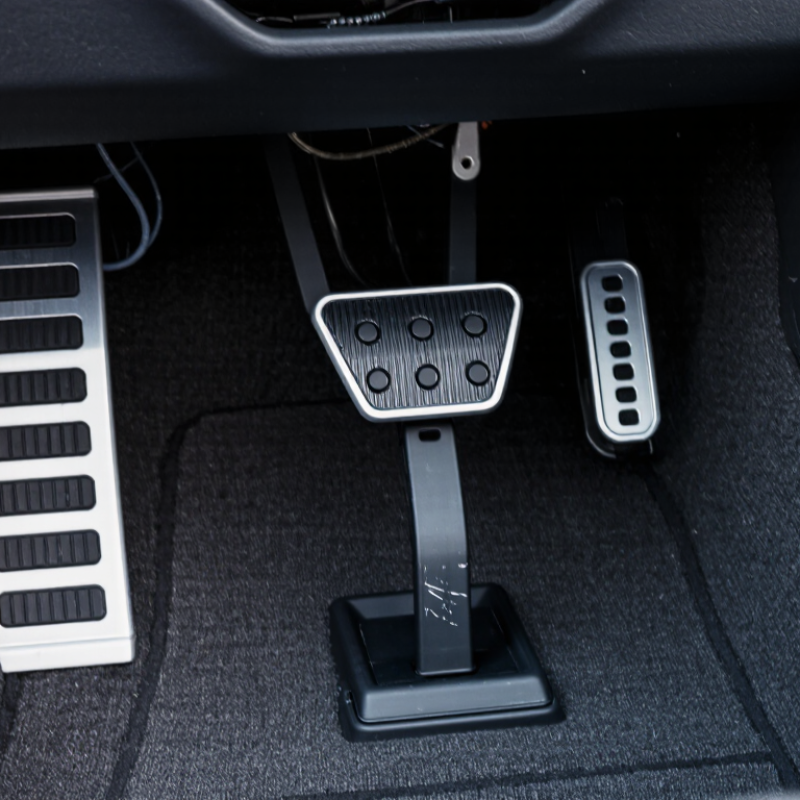
Why Is My Clutch Pedal Stuck to the Floor?
A clutch pedal stuck to the floor usually indicates lost hydraulic pressure or a failed release mechanism. Low fluid, air, or a leaking master cylinder can remove pedal resistance. A damaged slave cylinder may leave wet fluid near the transmission. Look for a soft pedal, fluid stains, or difficulty selecting first gear.
Cable-operated systems can fail differently. A stretched cable, broken linkage, or seized release fork may keep the pedal down. The release bearing can also bind, although that problem often creates grinding noise. I would not diagnose the fault from pedal feel alone. Check the reservoir only when the vehicle is safely parked, and never place your body under an unsupported vehicle.
The 2023 AAA Your Driving Costs report estimated maintenance, repair, and tire expenses at 9.68 cents per mile, based on 15,000 annual miles. That figure does not isolate clutch repairs, but it shows why neglected faults become expensive. NHTSA’s Traffic Safety Facts reports do not provide a reliable national failure rate for clutch hydraulics. Be cautious with dramatic online percentages.
Do not keep driving if gears grind, the vehicle creeps, or the pedal will not return. Continuing may damage the transmission and reduce control in traffic. A technician should inspect fluid level, hydraulic leaks, pedal linkage, cable travel, and clutch engagement. Sometimes the repair is simple. Sometimes it is not.
Why Is My Clutch Pedal Stuck to the Floor?
Common Causes of a Clutch Pedal That Will Not Return
A clutch pedal stuck on the floor usually indicates a release-system problem. Do not force it upward repeatedly. The most common cause is lost hydraulic pressure. Check the fluid reservoir and look beneath the gearbox for wet, oily marks. A failing master cylinder may leak inside the cabin, leaving damp carpet near the pedal. A slave cylinder can leak externally and prevent the clutch from disengaging.
Air in the hydraulic line can also create a soft pedal that stays down. Sometimes, the clutch cable is stretched, frayed, or disconnected. Cable-operated systems may develop stiff movement near the release arm. A broken return spring is another possibility. It can leave the pedal lifeless, even when fluid levels look normal. The clutch release bearing or pressure plate may also be damaged, especially after grinding noises or difficult gear changes.
I have seen drivers replace the pedal spring before checking a nearly empty reservoir. That mistake wastes time. Start with simple observations: fluid level, visible leaks, pedal resistance, and recent warning signs. Do not drive if gears engage while the pedal is depressed. A qualified technician should inspect the linkage and hydraulic system before bleeding or replacing parts. Bleeding may restore pressure temporarily, but it will not repair an active leak.
| Common Cause | What Happens | Typical Clues | Basic Checks | Urgency | Typical Remedy |
|---|---|---|---|---|---|
| Low or leaking clutch fluid | Hydraulic pressure drops, so the release mechanism cannot move the clutch properly. | Soft pedal, fluid level below the minimum mark, damp areas near the master cylinder, slave cylinder, hose, or fittings. | Check the reservoir and inspect visible hydraulic lines for wetness. Do not rely on fluid alone to identify the leak source. | High — avoid driving if the pedal will not return. | Repair the leak, refill with the specified fluid, and bleed the hydraulic system. |
| Failed clutch master cylinder | Internal seals bypass pressure, preventing consistent hydraulic movement. | Pedal gradually sinks, repeated pumping temporarily improves operation, or fluid appears around the pedal linkage or firewall. | Hold the pedal down and observe whether it slowly loses resistance. Inspect the master-cylinder area for fluid contamination. | High — failure can become sudden. | Replace or rebuild the master cylinder as appropriate, then bleed the system. |
| Failed clutch slave cylinder | The cylinder cannot convert hydraulic pressure into movement at the clutch release mechanism. | Fluid near the transmission area, incomplete clutch disengagement, difficulty selecting gears, or a pedal that remains low. | Look for leakage around the slave cylinder and check whether the release arm moves when the pedal is pressed. | High — continued driving may cause gear damage. | Replace the cylinder or its seals, inspect related parts, and bleed the hydraulic circuit. |
| Air trapped in the hydraulic system | Air compresses instead of transmitting pedal force, creating inadequate clutch release. | Spongy pedal, inconsistent engagement, or symptoms that appear after hydraulic work or a fluid leak. | Compare pedal firmness during repeated presses and check for recent repairs or low fluid levels. | Medium to high — depends on gear-selection difficulty. | Find and repair any leak, then bleed the system using the vehicle’s specified procedure. |
| Broken or disconnected clutch cable | Cable-operated clutches lose the mechanical connection between the pedal and release lever. | Pedal suddenly becomes loose, may stay on the floor, and the clutch may remain engaged or disengaged. | Inspect the cable ends, retaining clips, outer casing, and release lever for separation or damage. | High — the clutch may be unusable. | Reconnect or replace the cable and adjust it according to the vehicle’s specifications. |
| Binding pedal pivot or linkage | Corrosion, dirt, lack of lubrication, or a damaged bushing restricts pedal movement. | Pedal feels stiff, returns slowly, or makes squeaking, clicking, or grinding noises near the pedal assembly. | With the engine off, observe the pedal and linkage for restricted movement. Do not force a stuck pedal. | Medium — high if the pedal intermittently sticks. | Clean and lubricate suitable pivot points or replace worn bushings and damaged linkage parts. |
| Broken return spring | The spring no longer helps return the pedal or release mechanism to its normal position. | Pedal remains low but hydraulic pressure may feel normal; a loose spring or unusual pedal movement may be visible. | Inspect accessible pedal and release-mechanism springs for breakage, displacement, or stretched coils. | Medium to high. | Replace the spring and inspect the linkage for the condition that caused the failure. |
| Clutch release bearing or fork failure | A seized bearing, bent fork, or damaged pivot prevents smooth movement inside the clutch release mechanism. | Grinding or squealing when the pedal is pressed, heavy pedal effort, vibration, or incomplete clutch disengagement. | Listen for noise changes as the pedal is pressed. Internal inspection is usually required for confirmation. | High — continued use may worsen internal damage. | Remove the transmission for inspection and replace damaged release components as required. |
| Clutch pressure plate or clutch assembly damage | Internal clutch components can deform, break, or bind, preventing the pedal and release mechanism from returning normally. | Sudden pedal change, clutch slipping, burning odor, vibration, abnormal noises, or difficulty changing gears. | Check for related hydraulic or cable faults first; definitive diagnosis generally requires transmission removal. | High — do not continue driving if control is impaired. | Inspect and replace the damaged clutch components, then verify hydraulic or cable adjustment. |
Why Is My Clutch Pedal Stuck to the Floor?
How to Diagnose the Clutch System Step by Step
A clutch pedal stuck on the floor needs careful diagnosis before driving. Park safely, switch off the engine, and inspect the pedal area. Look for a broken return spring, loose pin, or damaged linkage. The pedal may feel soft, heavy, or completely lifeless. That detail matters.
Check the clutch fluid reservoir, if the system uses hydraulic actuation. A low level often indicates a leak, not normal fluid use. Inspect the master cylinder, hydraulic line, and slave cylinder for wet spots. Follow the line closely. Fluid can hide behind insulation or brackets. Press the pedal gently while watching the linkage move. If the pedal moves but the clutch arm does not, suspect a failed connection or hydraulic component. Bleeding air from the system may restore pressure, but it will not repair a leaking seal.
Cable-operated systems need a different inspection. Check for a stretched or snapped cable, a bent release arm, and unusual slack. A broken release bearing or pressure plate can also leave the pedal down, sometimes with grinding noise. Do not force the pedal repeatedly. That can worsen internal damage. I have found that rushed inspections often miss small leaks near the transmission. Recheck every connection. If the fault remains unclear, have a qualified technician remove the transmission and inspect the release mechanism.
A low or stuck clutch pedal is commonly investigated through the hydraulic circuit first. The chart compares the minimum dry and wet boiling points specified for common DOT brake-fluid classes used in hydraulic clutch systems.
Step-by-step diagnosis: Check the reservoir level and fluid condition, inspect the master-cylinder area for leaks, examine the hydraulic line and slave-cylinder boot, then test pedal movement and clutch release. Fluid boiling-point ratings are reference values only; they do not prove that a clutch fault is caused by overheating or incorrect fluid.
A clutch pedal stuck to the floor can remove your ability to select gears safely. Move the vehicle away from traffic only if it still rolls safely. Switch on the hazard lights and apply the parking brake. Keep the engine off. Do not force the gear lever or restart the engine while a gear is engaged.
Check whether the pedal returns after gentle lifting with your foot. Do not pump it repeatedly. That action may worsen a hydraulic fault and gives false confidence. Look beneath the vehicle for fresh fluid, especially near the transmission area. Inspect the reservoir if it is accessible, and note any sudden fluid loss. A low level often indicates a leak, not a simple maintenance issue.
Look inside the footwell for a broken spring, loose linkage, or a pedal that feels unusually light. Avoid reaching underneath the vehicle unless it is properly supported. Never rely on a basic jack alone. In my workshop experience, drivers often focus on the pedal and miss fluid under the car. That small detail changes the diagnosis. If gears will not engage with the engine off, or the pedal stays down, arrange professional recovery instead of driving. A short trip can become dangerous at the first junction.
A clutch pedal that stays on the floor needs prompt attention. Do not force it upward or continue driving in traffic. The fault may involve low hydraulic fluid, a leaking master cylinder, a failed slave cylinder, or a damaged clutch cable. Inspect the fluid reservoir and look for wetness near the pedal, gearbox, or connecting pipes. A small dark patch under the vehicle matters. Exact diagnosis requires checking pedal movement, hydraulic pressure, and clutch release travel.
Repair options depend on the failed part. A mechanic may replace a leaking cylinder, repair a damaged pipe, or bleed the hydraulic system. Air in the system can make the pedal feel soft, but bleeding alone will not fix a continuing leak. Cable-operated systems may need adjustment or a new cable. If the release bearing, pressure plate, or clutch disc has failed, removing the gearbox may be necessary. That repair costs more, yet replacing only one worn component can create another breakdown later.
I would not approve parts replacement without a clear inspection report.
Prevention starts with small habits. Check the fluid level during routine maintenance, and never ignore a changing pedal feel. Keep your foot off the clutch while waiting at lights. Avoid holding the vehicle on hills with clutch slip. Ask for hydraulic inspection when the fluid looks dirty or drops repeatedly. Cable adjustment should follow the vehicle’s service specifications. Some failures happen without warning, so prevention is imperfect. Still, early inspection can turn a roadside recovery into a manageable repair.
Lost hydraulic pressure is a common cause. A leaking cylinder, damaged pipe, air, cable trouble, or broken spring may be responsible.
Check the fluid reservoir and pedal resistance. Look for oily marks near the gearbox and damp carpet near the pedal.
Driving is unsafe when gears engage unexpectedly. Keep the engine off and arrange professional recovery if the pedal remains down.
You may lift it gently once with your foot. Do not pump it repeatedly. That can hide the real fault temporarily.
Low fluid often indicates a leak, not normal use. Inspect around the pedal, connecting pipes, and transmission area.
Yes, air can create a soft pedal that stays down. Bleeding may restore pressure briefly. It will not repair an active leak.
A cable may stretch, fray, disconnect, or move stiffly. The release arm might also show unusual resistance.
Damaged release bearings, pressure plates, or clutch discs may require gearbox removal. Grinding noises and difficult gear changes are useful warning signs.
Check fluid levels during routine maintenance. Avoid resting your foot on the clutch and slipping it on hills. Prevention is imperfect. Inspect changing pedal feel early.
If you are wondering, “why is my clutch pedal stuck to the floor,” the problem usually indicates a fault in the clutch’s hydraulic, cable, or mechanical release system. Common causes include low or leaking hydraulic fluid, air in the lines, a failed master or slave cylinder, a broken cable, damaged return spring, or worn internal clutch components. Because the vehicle may not disengage the clutch properly, continuing to drive can be unsafe and may cause further damage.
Begin with immediate safety checks: move the vehicle to a secure location, switch off the engine, and inspect for fluid leaks or unusual damage. A step-by-step diagnosis should include checking the pedal linkage, fluid level, hydraulic pressure, cable movement, and release mechanism. Depending on the fault, repairs may involve bleeding the system, replacing a cylinder or cable, repairing linkage, or renewing internal clutch parts. Regular fluid inspections and prompt attention to changes in pedal feel can help prevent the issue from returning.
TVC Auto