Choosing the right flywheel can significantly impact your vehicle's performance. Many drivers ask, "what is the difference between a single and dual mass flywheel?" This question is vital for anyone looking to optimize their driving experience.
Single mass flywheels are simpler and generally lighter. They provide direct power transfer. This feature often results in a more responsive feel during acceleration. However, they can transmit engine vibrations more noticeably. This can lead to increased wear on other components over time.
On the other hand, dual mass flywheels are designed to absorb vibrations. This can enhance comfort, especially in diesel engines. However, they are heavier and more complex. Repairing or replacing a dual mass flywheel can be costly. Each type has its advantages and drawbacks. Understanding these can help you make an informed choice.
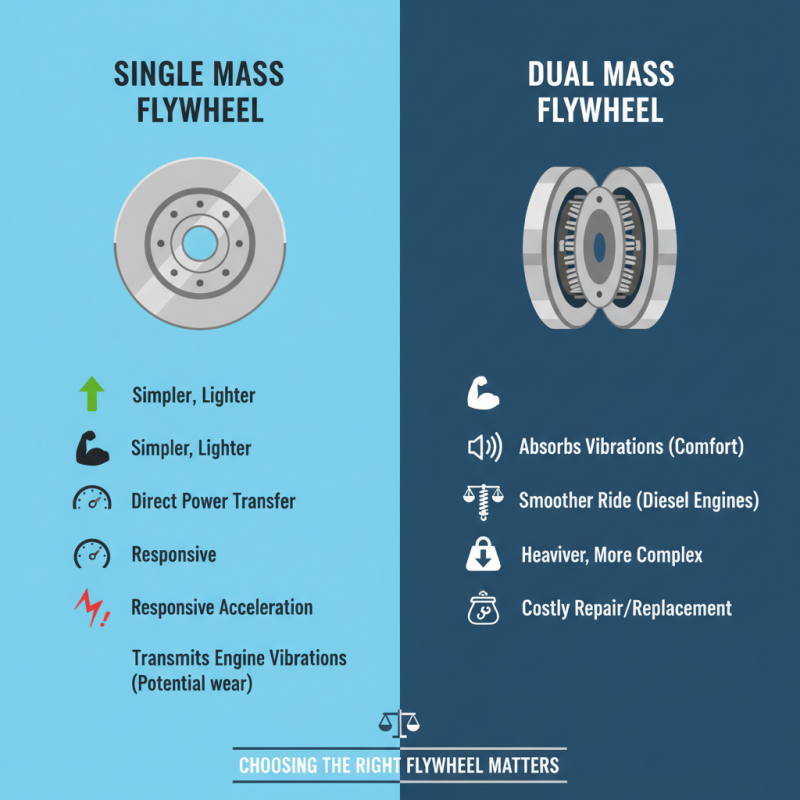
Single mass and dual mass flywheels serve specific functions in engine systems. A single mass flywheel consists of one solid piece. It is simpler in design and lighter, which can enhance performance. This type of flywheel directly connects to the crankshaft, providing a straightforward response. However, this design can produce higher vibrations and noise, affecting comfort.
In contrast, a dual mass flywheel has two separate components. These are connected with springs, allowing for greater flexibility. The primary goal is to dampen vibrations and reduce noise. This design is especially beneficial in diesel and high-torque engines. However, dual mass flywheels can be heavier and more complex. Their flexibility may lead to wear over time, causing potential reliability issues.
Understanding these differences is crucial. Drivers may prefer a single mass for performance and simplicity. Others may prioritize comfort and reduction of noise, favoring dual mass systems. Each design offers unique benefits and drawbacks. The choice ultimately depends on the driving experience desired and personal preferences.
Single mass flywheels (SMFs) and dual mass flywheels (DMFs) serve crucial roles in vehicle propulsion systems. The structural differences between them significantly affect performance metrics. SMFs typically consist of a single solid mass designed for simplicity and direct power transfer. DMFs, on the other hand, comprise two main components that are mechanically decoupled by a spring mechanism, which helps to reduce vibration and enhance comfort.
According to industry data, DMFs can cut engine vibrations by up to 50%. This feature allows for smoother driving experiences, particularly in high-torque scenarios. While the DMF offers advantages in comfort and noise reduction, it also presents complexity. The additional parts in DMFs mean increased maintenance and potential failure points. In fact, some reports indicate a higher replacement rate for DMFs, with failure rates approaching 10% within the first 100,000 miles.
SMFs, while straightforward and often more durable, may translate engine vibrations directly to the drivetrain. This could lead to wear in suspension and transmission components over time. Choosing between SMF and DMF isn't just a matter of performance; it also involves considering vehicle application and driving conditions. Users must weigh comfort against durability and repair costs. Understanding these differences helps in making informed decisions for optimal vehicle performance.
Understanding how single and dual mass flywheels affect engine performance is key for enthusiasts and mechanics alike. A single mass flywheel is simpler and lighter, enabling quicker engine response. This can lead to faster acceleration. However, it often results in increased vibrations. Too much vibration can wear out components more quickly. Some drivers find this aspect unpleasant.
On the other hand, dual mass flywheels are heavier and more complex. They dampen vibrations better. This can significantly improve driving comfort. Many drivers appreciate the smoother performance at higher speeds. But this comfort comes with downsides. Dual mass flywheels can be more expensive to replace and maintain. They might not deliver the same level of responsiveness as single mass designs.
Ultimately, the choice between these flywheels hinges on intent. Do you want speed and performance or smooth driving? Each comes with benefits and challenges. Addressing these factors will lead to a better decision tailored to individual needs. Understanding these aspects can enhance your vehicle's performance while balancing comfort and durability.
The choice between a single mass and a dual mass flywheel heavily influences vehicle performance and maintenance costs. Single mass flywheels typically cost less upfront. They are simpler, resulting in lower labor costs for installation and replacement. However, they can generate more noise and vibrations, potentially leading to engine wear. Dual mass flywheels are more expensive and complex, requiring specialized tools for replacement. On the flip side, they minimize engine vibrations and provide smoother gear changes.
Maintenance for single mass flywheels is straightforward, with a recommended replacement interval of around 100,000 miles. In contrast, dual mass flywheels may need inspection at more frequent intervals due to their intricate design. Reports indicate that dual mass systems can last up to 150,000 miles but require more careful monitoring.
Tips: Regularly inspect your flywheel for signs of wear. Listen for unusual noises during operation, as these can indicate underlying issues. Consider the long-term costs. Investing in a dual mass system may save on maintenance in the long run due to its durability.
| Feature | Single Mass Flywheel | Dual Mass Flywheel |
|---|---|---|
| Weight | Lighter | Heavier |
| Cost | Lower | Higher |
| Maintenance | Easier | More complex |
| Vibration | Higher | Lower |
| Durability | Less durable | More durable |
| Torque Transfer | Direct | Smooth |
| Application | Performance cars | Luxury vehicles |
| Installation | Simpler | More involved |
| Engine Compatibility | Broad | Limited |
| Noise Level | Noisy | Quieter |
Single mass and dual mass flywheels cater to different automotive needs. Single mass flywheels are simpler, lighter, and cheaper. They are commonly found in performance vehicles. Their design allows for direct power transfer and quicker revs. This type is less forgiving on engines, causing vibrations under high torque. It's ideal for driving enthusiasts who prioritize speed.
On the other hand, dual mass flywheels excel in comfort. They significantly reduce engine vibrations, enhancing smooth operation. This makes them popular in family vehicles and luxury cars. They are more complex and heavier, which can impact performance slightly. Still, they provide excellent dampening, making them useful for everyday driving.
Choosing between these flywheels depends on your driving style. Think about your priorities: comfort versus performance. Understand how these options fit different applications. Each type has its strengths and drawbacks, and a thorough assessment is crucial. Identifying your needs will guide you to the right choice.
: Single mass flywheels enhance performance, while dual mass flywheels reduce vibrations and noise.
A single mass flywheel is a solid piece, while a dual mass flywheel has two components separated by springs.
They provide direct power transfer and tend to be lighter, improving vehicle performance.
Dual mass flywheels require careful monitoring and inspection; they have a higher failure rate compared to single mass flywheels.
It is recommended to replace a single mass flywheel every 100,000 miles.
Yes, dual mass flywheels can last up to 150,000 miles but need more regular checks.
They can create more engine vibrations and noise, which may affect comfort.
They may prioritize comfort and smoother operation, especially in high-torque engines.
Unusual noises during operation can indicate underlying problems with the flywheel.
Consider performance, comfort, durability, and long-term maintenance costs when making your choice.
The article "Top 10 Differences Between Single and Dual Mass Flywheel" explores crucial aspects of flywheel technology, specifically addressing what is the difference between a single and dual mass flywheel. It begins by defining both types of flywheels and their purposes, highlighting how they function within an engine system.
The key structural differences are examined, showcasing the unique designs that enable each flywheel to perform differently under various conditions. The impact on engine performance is also analyzed, revealing how each type can influence power delivery and vibration control. Additionally, the article compares costs and maintenance, providing insight into the long-term considerations for each flywheel type. Finally, typical applications for single and dual mass flywheels are outlined, illustrating their specific roles in different automotive contexts.

TVC Auto