What Is Riding the Clutch in Traffic and Why Avoid It?

Time:2026-10-16 Author:Amelia
0%

Traffic can turn a simple manual gear change into a tiring, repetitive habit. Drivers often keep the clutch pedal partly depressed while creeping forward, waiting at lights, or holding position on a slope. This practice is known as riding the clutch. It may feel smoother in the moment. However, the clutch disc can slip against the flywheel and pressure plate. That friction creates heat, glazing, and unnecessary wear. A faint burning smell may be the first warning. The pedal can also feel different, and gear engagement may become less precise.

Understanding why you should never ride the clutch in traffic helps protect both your vehicle and your confidence. Qualified automotive technicians regularly identify clutch wear linked to prolonged slipping, especially during stop-and-go driving. The exact damage depends on the vehicle, traffic conditions, and driving technique. So, the habit is not equally destructive every time. Still, repeated exposure adds up. Use the clutch briefly, select neutral during longer stops, and keep your foot away from the pedal afterward. It sounds minor. It matters.

This guide examines what happens inside the clutch assembly and explains safer traffic habits. It also recognizes an uncomfortable truth: even careful drivers sometimes ride the clutch without noticing. A crowded junction, a steep ramp, or an impatient queue can encourage it. Learning to notice pedal pressure, engine vibration, and unusual smells is practical prevention. Small corrections today may avoid an expensive repair later.
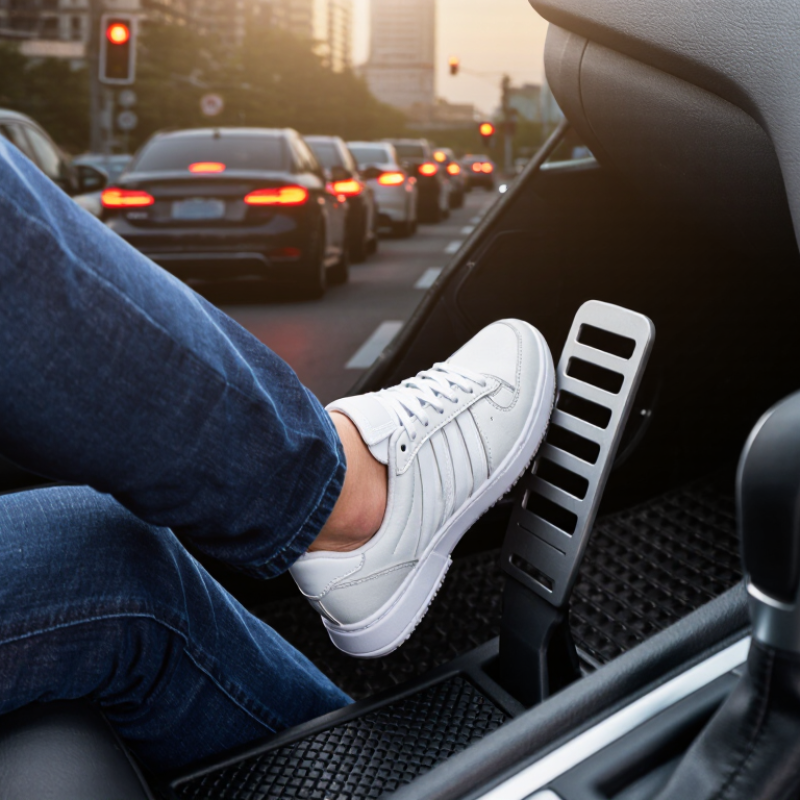
What Is Riding the Clutch in Traffic and Why Avoid It?

What Riding the Clutch Means in Heavy Traffic

What Is Riding the Clutch in Traffic and Why Avoid It?

In heavy traffic, riding the clutch means keeping the pedal partly depressed while the car creeps forward. The clutch remains between fully engaged and fully released. This controlled slip feels smooth, especially on crowded roads. It also creates heat. The U.S. Department of Energy reports that repeated stop-start driving reduces fuel efficiency, while technical guidance from SAE International links excessive clutch slip with friction and thermal stress.

Traffic makes the habit easy to develop. The 2023 INRIX Global Traffic Scorecard recorded 99 hours lost in congestion for drivers in London. During those long queues, many drivers hold the car at walking speed with half a clutch. That can wear the friction plate, pressure surface, and release bearing. The smell is often sharp and dusty. That is a warning, not normal progress.

Use first gear only when movement is steady. Fully release the pedal after the car begins rolling. At a complete stop, select neutral and release the clutch. On an incline, use the foot brake or handbrake instead of balancing throttle against clutch slip. I still catch myself creeping too quickly in traffic. The smoother method is not always the fastest one. It takes practice, and my timing is imperfect.

What Is Riding the Clutch in Traffic and Why Avoid It?

Riding the clutch means keeping the pedal partially depressed or holding the clutch at its bite point instead of fully engaging or disengaging it. This creates continuous friction, heat, and unnecessary clutch-plate wear.

Relative clutch-slip exposure score: The values below are a practical comparison based on how long the clutch remains partially engaged and how much heat can build up during common traffic situations. A higher score indicates greater wear risk.

In heavy traffic, select neutral and release the clutch when stopped for more than a brief moment. When moving, use first gear with the clutch fully engaged whenever possible. Avoid balancing the vehicle on the clutch, because prolonged partial engagement converts engine power into frictional heat and accelerates clutch wear.

How Clutch Riding Affects Vehicle Control and Wear

Riding the clutch in traffic means holding the pedal partly down while the engine drives the car. It feels smooth, but the clutch disc is still slipping. That friction creates heat between the disc, pressure plate, and flywheel. SAE technical studies on clutch thermal loading report surface temperatures exceeding 200°C during repeated slip tests. Real traffic is less extreme, yet crawling uphill can reproduce the same stress.

Control also suffers. A half-engaged clutch can make acceleration hesitant, especially when a driver watches mirrors, pedestrians, and gaps at once. The car may creep when the driver expects it to stop. It is not always dramatic. Small vibrations are easy to ignore. I have found that many drivers notice the smell before they notice their technique needs changing. Workshop inspection data commonly links persistent slip with glazing, shudder, and shortened friction-material life, although driving conditions make exact mileage impossible to predict.

Tips: Keep your foot fully off the pedal after changing gear. In a queue, use the brake and select neutral during longer pauses. On an incline, hold the vehicle with the brake, not clutch slip. Leave a larger gap, then move smoothly. A brief pause is cheaper than constant friction. Still, I sometimes overcorrect and create unnecessary stops; smoother traffic reading matters too.

What Is Riding the Clutch in Traffic and Why Avoid It? - How Clutch Riding Affects Vehicle Control and Wear
Dimension What It Means Effect in Traffic Recommended Practice
Definition Riding the clutch means keeping the clutch pedal partially depressed or resting a foot on it while the vehicle is moving. The clutch may remain partly engaged, allowing continuous friction between the clutch disc and flywheel. Use the clutch only when changing gear, starting, stopping, or controlling very slow movement when necessary.
Normal clutch operation The pedal is fully released after the gear change, allowing the clutch disc to clamp firmly between the engine and transmission. Engine power is transferred efficiently with little intentional clutch slip. Move the foot away from the pedal and use the vehicle’s normal brakes for routine speed control.
Clutch slip Clutch slip occurs when the engine and transmission rotate at different speeds while the clutch is partially engaged. Friction converts part of the engine’s energy into heat instead of useful motion. Allow brief, controlled slip during takeoff, then release the pedal smoothly and completely.
Vehicle control A partially engaged clutch reduces the direct connection between the engine and driven wheels. Engine braking is reduced, and throttle response can become less predictable during turns, descents, or sudden traffic changes. Keep the clutch fully engaged whenever practical and select an appropriate gear before entering a turn or descent.
Clutch-disc wear The friction lining wears whenever the disc slips against the flywheel or pressure plate. Frequent partial engagement can shorten clutch-service life, especially in stop-and-go traffic or on inclines. Minimize unnecessary pedal pressure and avoid holding the vehicle stationary with the clutch.
Heat generation Persistent slip produces heat in the clutch disc, flywheel, and pressure plate. Excessive heat can cause a burning odor, glazing, shuddering, or reduced friction performance. Use a low gear and steady throttle for slow movement; if overheating is suspected, stop safely and allow the clutch to cool.
Hill starts Holding the car on an incline with clutch slip keeps the clutch working continuously against gravity. It creates unnecessary heat and can cause the vehicle to roll or lurch if pedal control is inconsistent. Use the parking brake or hill-start assist where available, then release it as the clutch engages.
Stop-and-go traffic Repeated crawling can tempt drivers to balance the clutch at its friction point for long periods. This increases clutch temperature and wear compared with leaving a safe gap and moving in controlled intervals. Maintain a safe following distance, move smoothly, and fully release the clutch once the vehicle is moving steadily.
Foot position Resting the foot on the clutch pedal may apply light pressure even when the driver does not intend to disengage it. The release bearing and clutch mechanism may remain loaded, and slight slip may occur. Place the left foot on the footrest after completing a gear change.
Warning signs Common signs include engine speed rising without matching acceleration, a burning smell, juddering, or difficulty selecting gears. These symptoms may indicate clutch wear, overheating, or a related mechanical fault. Avoid continued heavy use and have the clutch system inspected by a qualified technician.
Best overall habit Use the clutch deliberately rather than continuously. Smooth clutch use improves control, reduces heat, and helps extend the service life of clutch components. Press the pedal fully for gear changes, release it smoothly, and keep the foot off the pedal between operations.
Note: Clutch wear depends on driving technique, traffic conditions, vehicle load, road gradient, and the condition of the clutch system.

Why Drivers Ride the Clutch in Stop-and-Go Conditions

In stop-and-go traffic, many drivers ride the clutch because it feels easier to control the car. They hold the pedal halfway down while moving a few feet at a time. This keeps the engine from stalling and allows gentle movement without repeated starts. On a steep road, the friction point can also feel safer than using the brake and clutch separately. Some drivers simply dislike the delay between releasing the pedal and moving forward.

That convenience has a cost. A partially engaged clutch creates friction inside the assembly. The friction material heats up, especially when traffic crawls for several minutes. A hot clutch may smell sharp, feel uneven, or engage higher than usual. Continuous pressure can also increase wear on the release bearing. I have caught myself doing this in crowded queues. It seemed harmless, but the left foot was working constantly.

A better habit is to leave a small gap ahead and move in short, complete movements. Select first gear, release the clutch smoothly, then lift the foot fully when traffic stops. Use neutral and the brake during longer pauses. On hills, use the handbrake rather than balancing the car on the clutch. The exact technique varies between vehicles, so the owner’s manual deserves attention. Even experienced drivers sometimes overcorrect, release too quickly, and cause a jerk. That mistake is easier to fix than making the clutch slip for every few seconds.

Mechanical Problems Caused by Prolonged Clutch Riding

Riding the clutch in traffic means holding the pedal partly down while the car moves slowly. This habit keeps the clutch slipping instead of fully engaging. A little slip is normal during takeoff. Prolonged slip creates intense friction and heat. The friction disc can glaze, reducing grip and causing shuddering. You may also smell a sharp, burnt odor near the transmission.

Repeated clutch riding can damage the pressure plate, release bearing, and flywheel surface. Heat may create uneven marks on the flywheel. Then engagement feels rough, especially after stopping on a hill. Repairs can become expensive when several parts require replacement. The exact wear rate is difficult to predict. It depends on traffic, load, driving technique, and clutch condition. That uncertainty is easy to underestimate.

Tips: In slow traffic, release the clutch fully whenever possible. Use the brake to control short pauses. Keep your foot away from the pedal afterward. On a hill, use the parking brake instead of balancing the car with clutch slip. Leave a larger gap ahead, then move smoothly rather than crawling continuously. If the pedal feels different, investigate early. A small hesitation can become a repair bill. I sometimes catch myself using clutch slip for convenience, which is precisely why this habit deserves attention.

Safer Techniques for Managing the Clutch in Traffic

Riding the clutch means keeping the pedal partly depressed while traffic moves slowly. This creates continuous friction between the clutch disc and flywheel. Some slip is necessary when moving away, but prolonged slip creates heat and accelerates wear.

In heavy traffic, keep a generous gap from the vehicle ahead. Move smoothly in first gear, then release the clutch fully whenever possible. Avoid resting your foot on the pedal. Keep your heel still. Neutral is calmer. If traffic stops for more than a few seconds, select neutral and use the foot brake. This removes pressure from the release bearing and reduces unnecessary heat.

On an incline, do not hold the car with the clutch. Use the parking brake while finding the biting point, then release it gently as the car moves. In very slow queues, allow the vehicle to roll briefly, then stop rather than balancing the car with constant clutch slip.

I used to creep forward continuously because it felt smoother. In reality, the clutch was working harder than needed. That habit also reduced my stopping distance and attention.

A low gear can help, but engine speed should remain moderate. If the car shudders, smells hot, or struggles to engage, pause safely and let the clutch cool. Experienced instructors often teach patience here, although real traffic can make perfect technique difficult.

FAQS

What does riding the clutch mean in heavy traffic?

It means holding the clutch pedal partly down while the car creeps forward. The clutch slips between engagement and release. This feels smooth but creates heat.

Why do drivers ride the clutch during traffic jams?

It allows gentle movement without repeated starts. Many drivers fear stalling or dislike sudden movement. The convenience feels useful. However, the left foot stays active constantly.

What damage can prolonged clutch riding cause?

Continuous slipping heats the friction disc and pressure plate. The disc may glaze and lose grip. Engagement can then feel rough or shuddering. Repairs may involve several clutch components.

What warning signs suggest clutch overheating?

A sharp, burnt smell may come from near the transmission. The pedal can feel different or engage unusually high. Shuddering may appear after stopping on a hill. That smell matters.

How should I drive through slow, moving traffic?

Select first gear when movement becomes steady. Release the clutch smoothly, then lift your foot fully. Leave a small gap ahead and move in short, complete movements.

What should I do during a longer traffic stop?

Select neutral and release the clutch pedal. Use the brake to keep the car stationary. Keep your foot away from the clutch afterward. Use neutral.

How can I prevent clutch slipping on a hill?

Use the foot brake or parking brake to hold the vehicle. Release the brake as the car begins moving. Avoid balancing the throttle against clutch slip. This takes practice.

Is a small amount of clutch slip always harmful?

A little slip during takeoff is normal. Prolonged slipping is the real concern. Wear depends on traffic, vehicle load, technique, and clutch condition. I still overdo it sometimes.

What is the safer habit in stop-and-go traffic?

Allow more space ahead instead of crawling continuously. Move smoothly, then stop completely when needed. The smoother method may feel slower at first. It is not perfect, but it reduces unnecessary heat.

Conclusion

Riding the clutch in heavy traffic means keeping the clutch pedal partly pressed while slowly moving, stopping, or waiting in a queue. Although this may feel like an easy way to control speed, it reduces vehicle control and creates unnecessary friction. The clutch disc, pressure plate, and release bearing can overheat and wear prematurely, potentially causing slipping, shuddering, unusual smells, or expensive repairs. This habit may also make it harder to respond smoothly in changing traffic conditions.

Drivers often ride the clutch because stop-and-go traffic feels tiring, especially on hills or in tight spaces. However, why you should never ride the clutch in traffic is simple: constant partial engagement wastes clutch life and can reduce driving precision. A safer technique is to fully press the pedal when stopping, select neutral during longer pauses, and use gentle clutch engagement only when moving. Maintain a safe gap, move at a steady pace, and use the brake to control brief pauses instead of balancing the vehicle on the clutch.

Amelia

Amelia

Amelia is a seasoned marketing professional with a wealth of expertise in our company’s core offerings. With an unwavering passion for driving growth and innovation, she plays a pivotal role in shaping our marketing strategies and enhancing brand visibility. A key aspect of her responsibilities......