China Top 10 Clutch Materials for Heavy Duty Towing

Time:2026-09-26 Author:Amelia
0%

Heavy-duty towing puts a clutch under repeated heat, pressure, and demanding starts. A loaded trailer on a steep ramp can expose weaknesses quickly. The right friction material helps manage engagement, wear, and heat, but no single option suits every truck. Vehicle weight, engine torque, trailer load, traffic, and driving habits all matter.

This guide compares ten clutch materials used in heavy-duty applications, including organic, ceramic, and sintered-metal options. Automotive engineer and author Fred Puhn’s engineering approach can be paraphrased as a useful rule: “Match the component to its real operating demands.” That is a paraphrase, not a verbatim quotation. For drivers researching how to choose the right clutch material for heavy-duty towing, the comparison offers practical factors to discuss with a qualified clutch supplier or technician. Look beyond aggressive marketing claims. Ask about engagement feel, heat tolerance, expected service life, and compatibility with the vehicle. A clutch that holds firmly may also engage abruptly. That trade-off is easy to overlook. Actual results depend on the complete clutch system, installation, and use. The best choice is the one that suits the truck’s measured demands—not simply the toughest-sounding material.
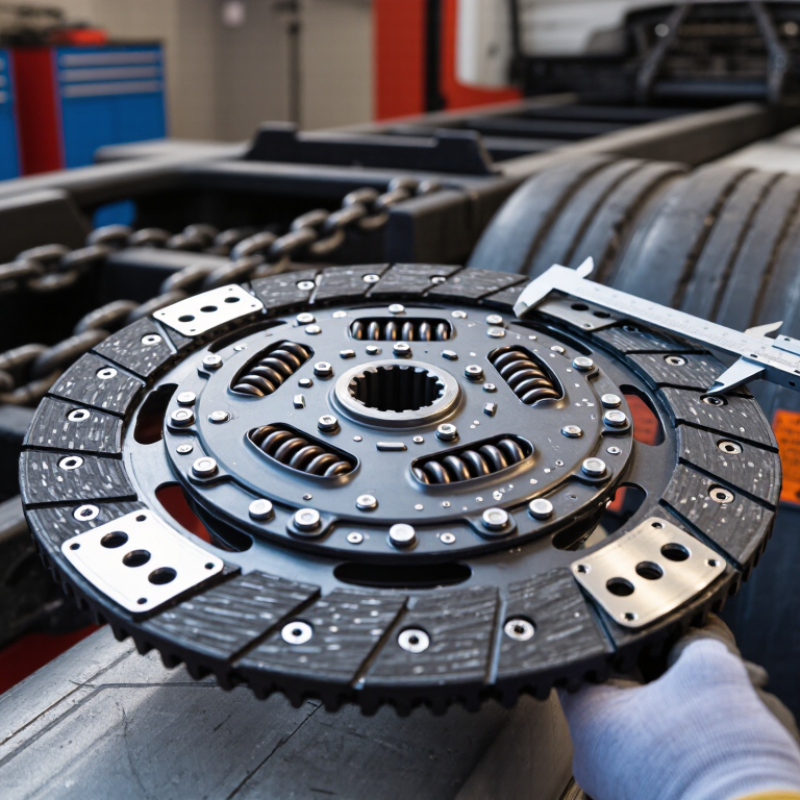
China Top 10 Clutch Materials for Heavy Duty Towing

Define Heavy-Duty Towing Clutches by Torque, Heat, Slip, and Load

A heavy-duty towing clutch should be judged by torque capacity, heat control, slip behavior, and load—not by material name alone. Capacity depends on friction coefficient, clamp force, plate size, and the number of friction surfaces. A material cannot compensate for an undersized assembly. Check the engine’s peak torque and the clutch maker’s stated operating limits.

Heat changes everything. Organic facings often engage smoothly, while ceramic or sintered-metal compounds can tolerate higher temperatures but may feel abrupt. Repeated starts on a steep grade can build heat quickly, especially with a loaded trailer. Look for evidence of stable friction under repeated engagement, not just a high temperature claim. Some slip is useful during take-up. Persistent slip is costly.

Load matters at the wheels and at the clutch. Low gearing can reduce clutch strain during launch, but poor technique still creates excess heat. A neat ranking of ten materials can be misleading; the same compound may behave differently with another pressure plate or flywheel. This part is not always tidy. Match the friction material to vehicle mass, terrain, and stop-start frequency, then inspect for glazing, hot spots, and uneven wear after demanding use.

China Top 10 Clutch Materials for Heavy Duty Towing

Define heavy-duty towing clutches by torque, heat, slip, and load

The bars show broad, indicative friction-surface temperature ranges in degrees Celsius—not guaranteed limits. Actual performance varies with formulation, pressure, cooling, and duty cycle. Heat tolerance is only one selection factor: torque capacity depends on clutch area and clamp load, while slip behavior and towing load depend on the complete clutch design.

Classify China’s Top 10 Clutch Materials as Organic, Metallic, or Composite

For heavy-duty towing, clutch friction materials must handle repeated starts, heavy loads, and heat from slow maneuvers. These ten material families fit three broad groups, though actual facings often combine ingredients.

Organic options include phenolic-resin paper, aramid fiber, glass fiber, and cellulose fiber. They can provide progressive engagement and reduce chatter, but sustained heat may shorten service life. Cellulose is the least convincing choice for severe towing unless the formulation and cooling conditions suit the duty cycle.

Metallic materials include sintered copper, bronze, iron, and steel. Their strength and heat tolerance can help under high loads, but engagement may feel harsher, and flywheel wear deserves attention.

Composite choices include ceramic-metal blends and carbon-carbon material. Ceramic-metal blends can resist heat, while carbon-carbon is light and stable at high temperatures. Neither label guarantees good towing behavior.

The category alone is not a buying recommendation. Resin content, fiber layout, porosity, surface finish, and clutch geometry all affect performance. A copper-rich facing, for example, may behave differently from one with a small copper fraction.

Test data under the intended load matters. So does a properly matched pressure plate. These rankings are a useful starting point, not a universal order; real-world duty cycles can make the “best” material look less impressive.

Compare Typical Friction Coefficients: μ 0.25–0.55 Across Material Types

For heavy-duty towing, clutch friction coefficient matters most under heat and load. A practical screening range is μ 0.25–0.55, but it is not a universal rating. Organic facings often sit near 0.25–0.35, while ceramic and sintered-metal blends can reach roughly 0.40–0.55. Aramid-based facings commonly fall between these bands. Actual results shift with temperature, contact pressure, speed, and surface condition. The ASM Handbook, Volume 18, explains why friction data must be interpreted alongside wear and operating conditions. SAE J661 provides a recognized friction-material test procedure, but its results should not be treated as a guaranteed towing-clutch specification.

Tips: Compare coefficients at operating temperature, not only when cold. A clutch rated at μ 0.50 may engage abruptly, which can make trailer starts less smooth on a steep ramp. Check fade, wear, and recovery data too. Those details matter when a loaded vehicle crawls uphill. Ask for test conditions and repeatability figures; a single coefficient can hide variation. Real installations are messier than a neat chart.

Organic materials may offer smoother engagement, while metallic blends can tolerate harsher heat and load. Yet higher μ alone does not mean longer service life. For a 3,000-kilogram trailer, frequent stop-start driving can expose weaknesses that steady highway towing never reveals. Treat the range as a shortlist, then match it to vehicle mass, terrain, and clutch temperature. A little uncertainty remains without application-specific testing.

Evaluate Heat Fade, Wear, and Repeated-Start Performance for Towing

For heavy towing, a clutch facing must resist heat fade during long climbs and repeated starts on steep ramps. A single cold engagement tells little. SAE J661 measures friction-material fade and recovery through controlled dynamometer cycles; it’s a brake-lining method, not a clutch towing certification. Still, its fade-and-recovery logic offers a useful screening model. Track torque retention alongside facing temperature, then inspect for glazing, cracks, and uneven wear. Small details matter. A hot, polished patch can signal trouble before obvious slipping begins.

Compare candidate materials under the same load, flywheel condition, and cooling interval. Log temperature and torque across 20 repeated starts, then measure facing thickness loss. That 20-start sequence is a proposed comparison protocol, not a published pass threshold. Keep the distinction clear. A material that recovers quickly after one hot cycle may still wear rapidly over months of towing. SAE J661-style data can help characterize friction stability, but real trailer mass, gearing, and driver technique change results. I would not rank materials from peak friction alone; that shortcut misses heat soak between starts. Industry data should be paired with application-specific testing, and test conditions should be reported with every result.

Match Material Choices to Vehicle Duty, Service Life, and Quality Standards

For heavy-duty towing, clutch material should match the vehicle’s actual workload, not just its maximum torque figure. Organic facings often offer smoother engagement in traffic and can reduce driveline shock. They may wear faster under repeated heavy launches. Ceramic or sintered materials can tolerate higher heat, but engagement may feel abrupt and increase stress on related components. There is no perfect material. A loaded pickup climbing a gravel grade has different needs from a work truck making frequent city stops.

Tips: Check towing weight, route, stop frequency, and cooling conditions before choosing. Ask suppliers for friction-temperature data, wear testing, dimensional tolerances, and batch traceability. Confirm compatibility with the flywheel and pressure plate, too. A material rating alone says little about the complete clutch assembly.

Service life depends on more than the facing. Correct installation, release-system adjustment, and flywheel condition all matter. Look for quality checks that reflect repeatable testing, not vague claims of “heavy duty.” In practice, a slightly softer engagement can be worth more than a high heat rating. That trade-off is easy to overlook. A careful fit still needs real-world validation under the vehicle’s intended load.

China Top 10 Clutch Materials for Heavy Duty Towing - Match Material Choices to Vehicle Duty, Service Life, and Quality Standards

Comparison is qualitative. Actual torque capacity, heat limits, engagement, and service life depend on the complete clutch design, vehicle setup, load, driving conditions, and installation.

Rank Friction Material / Construction Engagement Feel Heat and Fade Tendency Wear and Service-Life Tendency Typical Towing Application Main Trade-Off Quality and Validation Checks
1 Heavy-duty molded organic composite
Resin-bound fibers and friction modifiers, sometimes with metallic content.
Generally progressive and manageable. Moderate; repeated slipping can cause fade and accelerated wear. Often a balanced choice when correctly matched to the vehicle and operated without prolonged slip. Road vehicles that need smooth launches and regular towing within the clutch’s rated capacity. Smooth operation, but less tolerant of severe heat than many metallic or sintered constructions. Confirm fitment and torque rating; review facing uniformity, bond integrity, and application test results.
2 Woven organic composite
Woven friction yarns impregnated with resin and friction modifiers.
Typically smooth, with a controllable take-up. Moderate; performance depends on the weave, resin system, and operating conditions. Can provide consistent wear in suitable road-duty applications; not immune to heat damage from slipping. Towing where low-speed control and comfortable engagement are priorities. Usually prioritizes smoothness over the high heat tolerance of sintered facings. Check weave consistency, resin cure, facing attachment, and performance after thermal cycling.
3 Aramid-reinforced organic composite
Aramid fibers combined with resin and other friction ingredients.
Generally smooth and progressive. Moderate to good in suitable formulations; the complete formulation determines heat behavior. Can offer good durability under appropriate loads; service life still depends strongly on heat and driving technique. Road towing applications requiring a refined engagement feel and a non-abrupt take-up. Fiber type alone does not establish torque capacity or heat limit; verify the specific clutch design. Request formulation-specific friction, wear, and thermal test data rather than relying on fiber descriptions alone.
4 Semi-metallic organic composite
Resin-bound organic fibers blended with metallic particles or fibers.
Moderate; may feel firmer than a conventional organic facing. Often better suited to heat than basic organic facings, though formulation and clutch design matter. Can balance wear and heat handling; mating-surface wear must be checked for the specific design. Frequent towing where a compromise between road manners and higher thermal demand is needed. May be noisier or less smooth than all-organic alternatives, depending on the facing and mating parts. Check friction stability, facing bond strength, wear against the specified flywheel, and batch consistency.
5 Ceramic-metallic composite
Resin-bound or otherwise bonded friction formulation containing ceramic and metallic constituents.
Often firmer and more abrupt than organic materials. Generally selected for increased heat handling; exact limits are design-specific. May tolerate demanding use, but can increase wear on mating surfaces if not properly matched. High-load towing where heat exposure is significant and the vehicle can accommodate a firmer engagement. Engagement may be less refined; confirm compatibility with the flywheel, pressure plate, and driveline. Review application-specific engagement, thermal, wear, and mating-surface test results.
6 Sintered copper-alloy friction material
Metal powder-based facing consolidated by sintering, commonly used in specialized clutch designs.
Firm, with engagement behavior dependent on facing geometry and clutch design. Well suited to high thermal loads in applications designed for sintered facings. Can withstand demanding service, but mating-part wear and operating conditions affect life. Heavy-duty or industrial-style applications where the clutch is specifically designed for metallic facings. May be harsh in traffic and can require compatible mating surfaces; not a universal road-vehicle upgrade. Check sintering quality, porosity control, dimensional accuracy, and compatibility with the clutch assembly.
7 Sintered iron-based friction material
Iron-based powder metallurgy facing for clutch systems engineered for this material.
Typically firm; engagement characteristics vary with design and surface finish. Suitable for severe thermal and load demands when used within its intended application. Can support heavy-duty service, but wear rates and mating-surface effects require application testing. Specialized heavy vehicles or equipment with a clutch system designed for iron-based facings. May be too aggressive for a standard passenger-vehicle-style clutch setup or frequent smooth launches. Verify material composition, sintered structure, dimensional stability, and assembly-level durability results.
8 Wet-clutch paper-based friction material
Porous paper-based facing engineered to operate in transmission fluid.
Designed for controlled engagement in an oil-wetted clutch pack. Depends on fluid, cooling, clutch-pack design, and duty cycle; not intended for dry-clutch use. Service life depends on fluid cleanliness, correct lubricant, operating temperature, and pack loading. Wet multi-plate clutches in transmissions or equipment used for towing and load handling. Requires fluid-compatible materials and cannot be substituted for a dry clutch facing. Validate fluid compatibility, friction behavior in the specified lubricant, and wet-clutch wear performance.
9 Carbon-composite friction material
Carbon-based composite construction used in specialized high-performance clutch systems.
Design-dependent; may require specific operating conditions for consistent engagement. Can handle high temperatures in purpose-designed systems; performance depends on construction and use. Specialized material with service life dependent on operating cycle, handling, and system design. Specialty or competition-derived applications, rather than a default choice for conventional road towing. Often costly and application-specific; engagement and operating requirements may not suit ordinary towing. Require system-level thermal, friction, wear, and fitment validation for the exact operating cycle.
10 Segmented metallic or puck-style facing
Multiple friction segments made from a metallic or composite formulation on a clutch disc.
Usually rapid and firm engagement; feel varies with segment count and clutch design. Can support high-load use when matched to the assembly, but localized contact affects heat behavior. Durability depends on segment material, contact conditions, and mating-surface compatibility. Specialized high-torque applications where packaging or engagement characteristics call for a segmented disc. Less smooth at low speed and can place higher demands on the driveline and mating surfaces. Inspect segment attachment, runout, balance, dimensions, and complete clutch-system compatibility.

Quality note: ISO 9001 concerns a manufacturer’s quality-management system; it does not by itself certify clutch material performance. Ask for traceable batch records and test results relevant to the intended dry- or wet-clutch application, including friction behavior, wear, thermal performance, facing attachment, and dimensional inspection. Confirm all material choices against the vehicle and clutch-system specifications.

FAQS

What defines a heavy-duty towing clutch?

Torque capacity, heat control, slip behavior, and vehicle load all matter. Material name alone is not enough.

How can I estimate the clutch capacity I need?

Check peak engine torque and the clutch assembly’s stated operating limits. Also consider vehicle mass and trailer weight.

Which materials tend to engage smoothly?

Organic facings often engage progressively and may reduce chatter. They can wear faster during repeated heavy starts.

Which materials handle higher temperatures?

Ceramic and sintered-metal compounds can tolerate substantial heat. Engagement may feel abrupt. That trade-off matters.

Is a little clutch slip always harmful?

Brief slip helps during take-up. Persistent slip creates excess heat and can accelerate wear. Not ideal.

Does the material determine towing performance by itself?

No. Clamp force, plate size, friction surfaces, and clutch geometry also affect performance.

What should I check before choosing a clutch?

Review towing weight, terrain, stop frequency, and cooling conditions. Confirm compatibility with the flywheel and pressure plate.

How can I spot wear after demanding towing?

Inspect for glazing, hot spots, and uneven wear. Check installation and release-system adjustment, too.

Is there one best material for every towing vehicle?

No. A loaded pickup climbing gravel differs from a work truck in city traffic. The ranking is not always tidy.

Conclusion

Heavy-duty towing clutches must handle high torque, sustained heat, repeated slipping, and changing vehicle loads without losing dependable engagement. China’s ten leading clutch material choices can be understood through three broad groups: organic materials, metallic materials, and composites, each offering a different balance of smooth engagement, friction, durability, and heat tolerance. Typical friction coefficients range from approximately μ 0.25 to 0.55, depending on the material and its intended operating conditions.

When considering how to choose the right clutch material for heavy-duty towing, compare more than friction level alone. Assess resistance to heat fade, wear over time, and performance during repeated starts, especially on hills or under heavy loads. Match the material to the vehicle’s towing duty, expected service life, and required quality standards. A suitable choice should provide stable torque transfer and controlled wear while remaining appropriate for the vehicle’s operating conditions.

Amelia

Amelia

Amelia is a seasoned marketing professional with a wealth of expertise in our company’s core offerings. With an unwavering passion for driving growth and innovation, she plays a pivotal role in shaping our marketing strategies and enhancing brand visibility. A key aspect of her responsibilities......